

04 · MATERIAL
Silver or brass: which should I choose?
A concept shows the direction of a design, but the shape on screen does not automatically translate into a workable product structure. Checking actual dimensions, proportions, metal thickness and connections during design can help reduce major changes during production.
Will the details read
at actual size?
Jewelry concepts are often drawn much larger than the finished piece to make small details visible. Fine engraving lines and grooves that look clear when enlarged may merge or become indistinct at actual size. Check whether small patterns and closely spaced details retain their intended character when reduced to actual size.
Dimensions and
proportions
Even when width, height and thickness are specified, the overall impression changes if those dimensions produce different proportions from the concept. Applying fixed dimensions to a concept with prominent decoration may make that decoration look smaller or the body look thicker. Check each measurement and whether the desired proportions hold when all dimensions are applied together.
Thickness and
connections
Very thin tips, sharp edges and deep, narrow grooves may look natural in an image but be difficult to preserve during metalworking and polishing. Parts hidden in the concept, such as the backs of decorations or overlapping elements, also need real physical connections. Alongside the front appearance, review the required thickness, room for connections, and whether the side and back structures work.
What matters
most to preserve?
If every element has equal priority, it is difficult to decide how to adjust the design into a manufacturable structure. Distinguishing essential design features from areas that can change for production helps preserve the original intent. When the core design is clear, necessary production changes can be judged in a way that stays close to the original idea.
AI-generated images can serve as references to explain the shape and mood you want. For production, unseen surfaces, connections and actual dimensions need further review.
AI images and
jewelry design
A single image does not uniquely determine the structure of the parts it cannot show. Surfaces absent from the image and connections across different views must be reviewed separately before production.123 In jewelry, where small changes in connection positions and three-dimensional details alter the piece itself, this difference becomes a significant issue in production.
Check 01.
Structure and reflected light
A bright or dark line in an AI image may not clearly represent a metal contour, a groove, an overlapping structure or simply reflected light. Reflections and shadows can look natural in a single image even when they do not match the product’s structure. A person needs to distinguish structure from lighting effects before the image is turned into a physical form.4
Check 02.
Do the different views really show
the same piece?
AI-generated front, side and back images may not be accurate views of one consistent product.23 The number of decorations, ring thickness, connection positions and proportions can vary between images. Instead of using them directly as production views, first decide which image and form will serve as the reference.
Making an inquiry
with AI images
It may not be possible to confirm manufacturability from AI images alone, but you can still use them to make an inquiry. TN Silver reviews your design intent, then discusses the adjustments needed in light of actual dimensions, connections and production processes. Having a reference image and a clear idea of which details must stay makes it easier to reach a manufacturable structure.
Related research
The research below addresses general technical limitations in single-image reconstruction, visual correspondence, spatial consistency and physical reasoning. It is not a direct comparison of specific image-generation models.
- SPAR3DCVPR 2025 · Ambiguity in single-image 3D reconstruction
- Are They the Same?ICCV 2025 · Limits of visual correspondence between images
- Multimodal Language Models Cannot Spot Spatial Inconsistencies2026 · Assessing 3D spatial consistency across views
- PhysBenchICLR 2025 · Reasoning about physical relationships and states
A production inquiry can start with sketches, reference images or existing samples that explain the form you want. You can inquire even if you have not yet decided on exact dimensions, materials, plating or surface treatments. Finished production drawings are not required. Detailed specifications and the physical construction are decided step by step as the design is refined.
Start with the materials
you already have
Send sketches, reference images or existing samples that explain the form you want. Your concept does not need to show the exact thickness, back structure or method of connecting components. After confirming the design direction, we adjust the structure to suit the actual dimensions and production method.
The more you have
already decided
Materials, plating color, surface treatment, actual dimensions and quantities are decided before production begins. They do not all need to be fixed at the first inquiry; details can be narrowed down during refinement to suit the product’s purpose and requirements. The more decisions are already made, the less there is to check and adjust, helping the project reach production sooner.
Your concept is the
reference for refinement
Not every element in a concept is necessarily equally fixed. Some parts, such as the overall form, need to remain, while thicknesses, gaps and connections may change to make production possible. We distinguish what should remain and how far adjustments can go by reviewing the construction, materials and processes.
Have CAD or 3D files?
Send them too
CAD or 3D files let us inspect dimensions, curved surfaces and relationships between parts in detail, making refinement and production much easier.
You can also inquire with an STL file. Depending on the product geometry, file condition and production method, the existing file may be usable or new CAD work may be required. The amount of work can differ considerably. We assess how an STL file can be used after reviewing the product and the file.
Silver and brass differ in material cost and market perception. But the price of the metal alone does not determine the finished product’s appearance or manufacturing quality. The right material depends on the relative importance of intrinsic material value, finished form and surface quality, and pricing.
your brand’s product story
your target price
Compare the material
and finish together
Materials and finishes should be considered together. The same metal can look different depending on surface work and plating specifications. Check the desired form, color and shine in a physical sample, and choose with both material characteristics and target price in mind.
When 925 Silver
is the right choice
Silver is suitable when the 925 Silver material itself is important to the product’s value and how it is presented for sale. It clearly communicates the use of a precious metal and fits brands whose product stories center on the material. However, material costs become more significant as product volume or order quantity increases, so design size and target retail price need to be considered together.
When Brass
is the right choice
Brass can be a good choice when form, finish and an accessible price point matter most. It can reduce material costs when testing several new designs or making larger pieces, and plating allows a range of colors and finishes, including white, gold and rose gold. Brass is a distinct material chosen for a product’s purpose and pricing, rather than a lower-grade substitute.
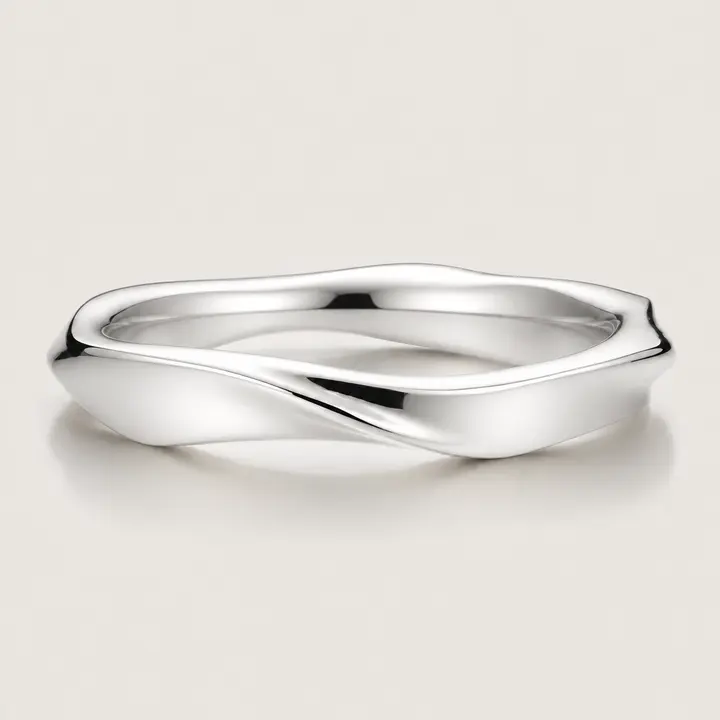
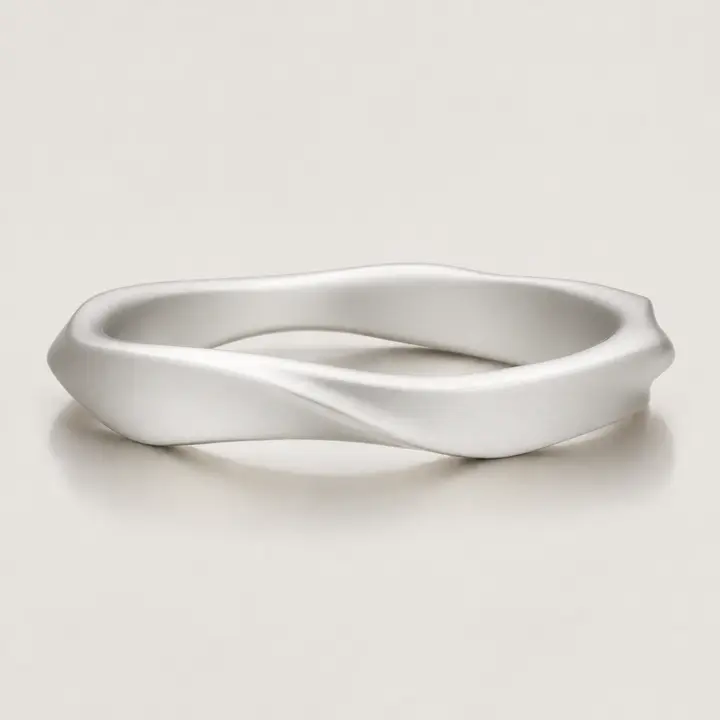
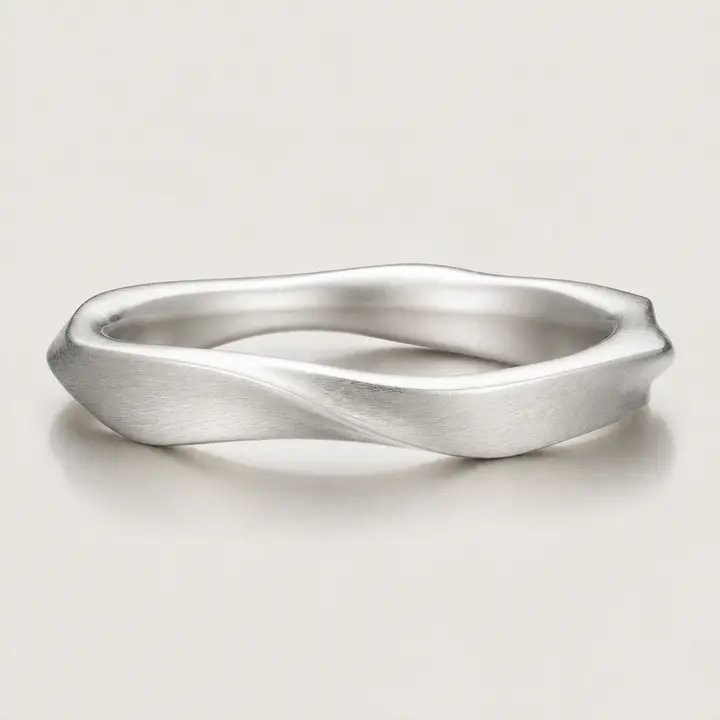
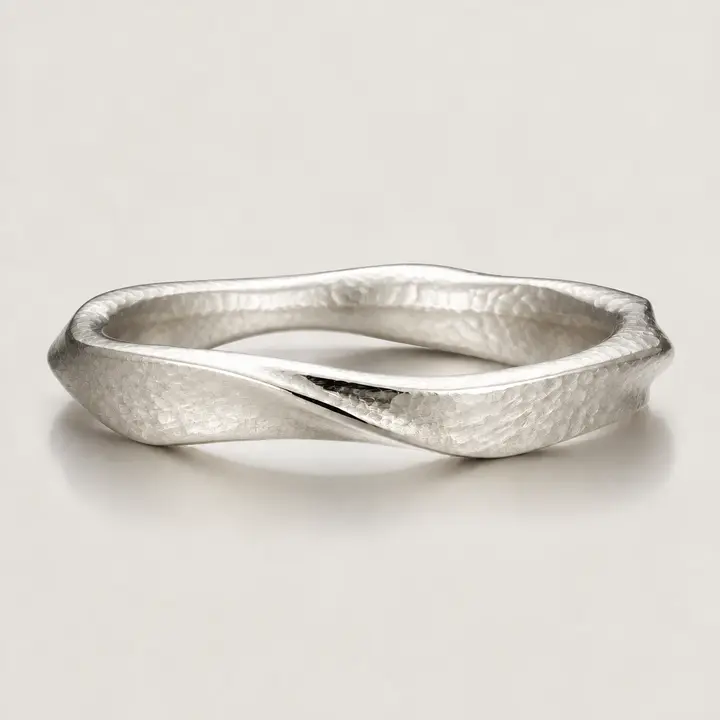
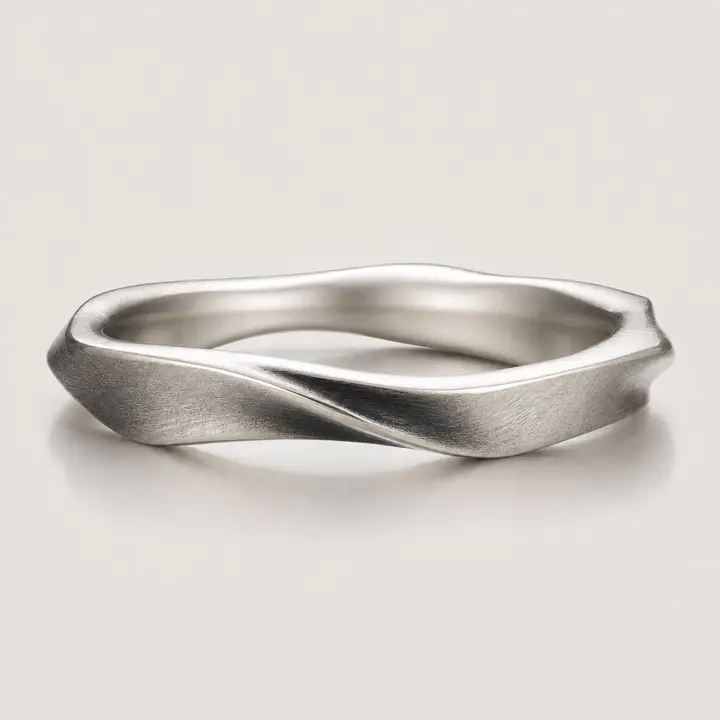
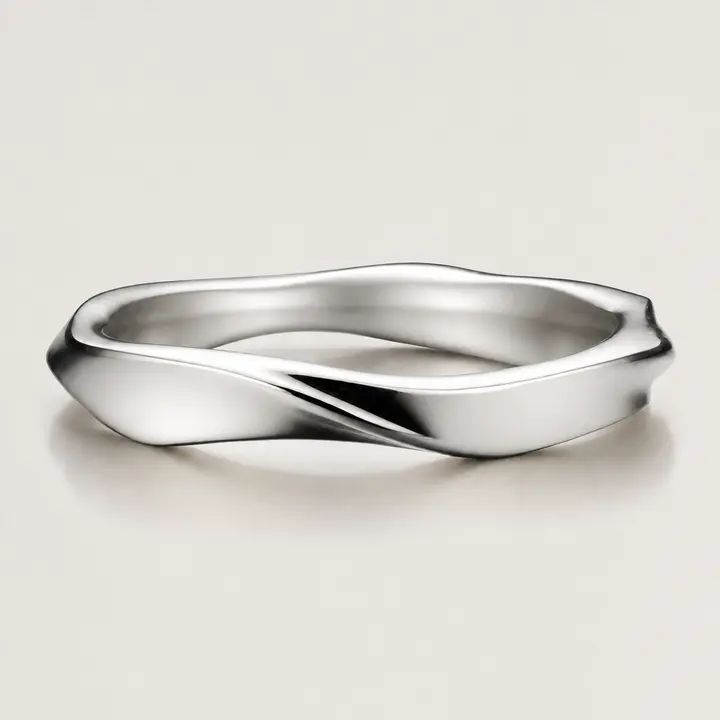
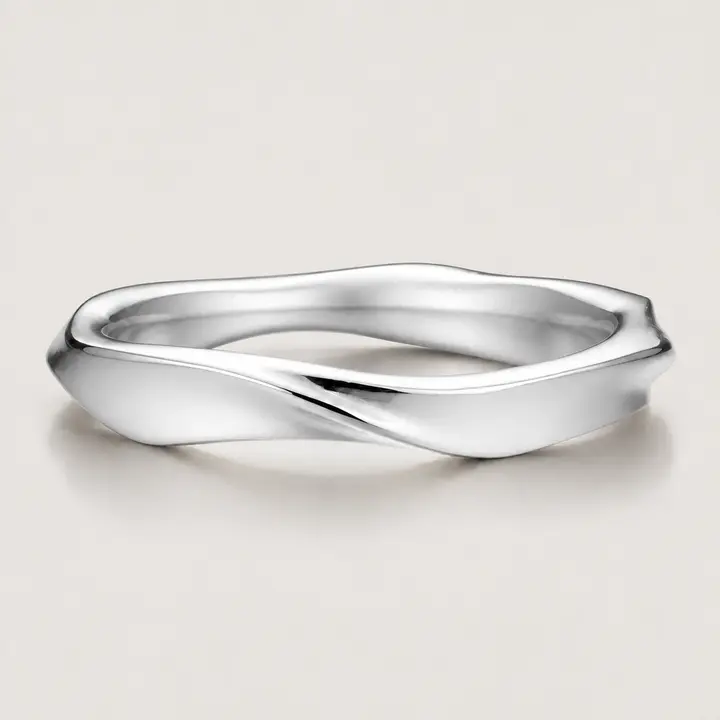
Pieces of identical shape can look entirely different depending on surface reflection, texture, color and finishing treatments. Even treatments with the same name can produce different results depending on the method and underlying surface, so reviewing the desired contrast alongside physical samples is the most accurate approach. The images below are mockups for a quick comparison.
Light and texture
Polished and matte finishes change reflected light, while brushing and hammering add directional lines and texture. The same treatment looks different with different curves and texture scales, so decide whether the whole piece should share one finish or selected areas should contrast.
 AI MOCKUP
 AI MOCKUP
 AI MOCKUP
 AI MOCKUP
Oxidized
Oxidizing is a surface treatment that deliberately darkens metal through a chemical reaction. On silver, it forms a sulfide layer that produces a black or dark gray appearance. Repolishing raised areas increases the contrast between dark recesses and bright metal. The depth of the grooves and how often an area is touched can affect where the dark finish remains.
 AI MOCKUP
 AI MOCKUP
Plating colors
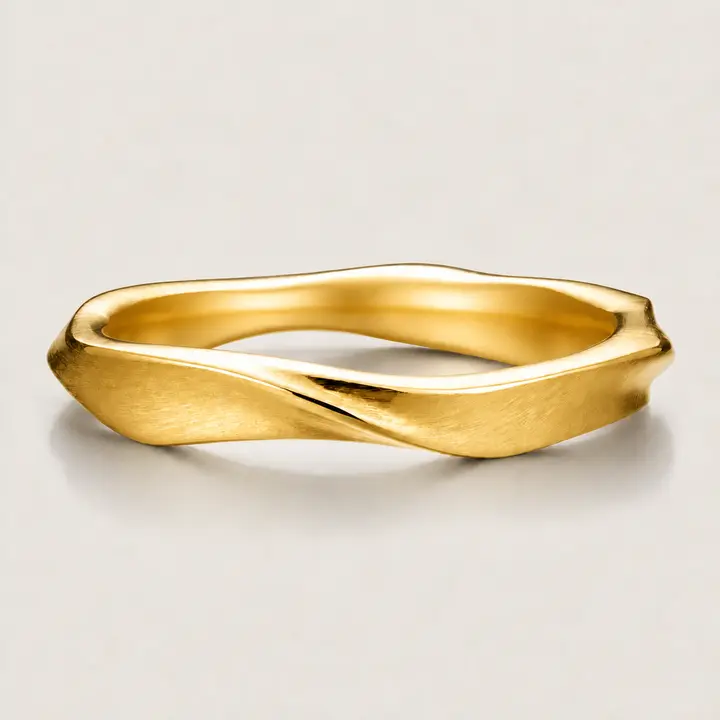
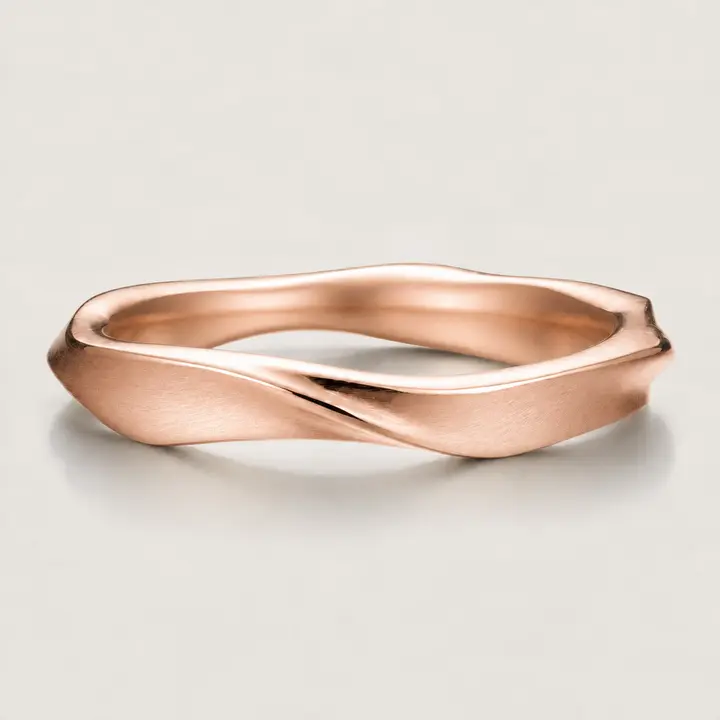
White, gold and rose gold plating change the metal’s surface color, but they do not reproduce a screen color value exactly. The same plating color can look different on polished or matte surfaces, across curves, and under different lighting. When sending reference photos, indicate both the color family and the level of shine you want.
 AI MOCKUP
 AI MOCKUP
 AI MOCKUP
Noble Shield™
Noble Shield™ is TN Silver’s multilayer electroplating and surface finishing specification, combining several operations rather than a single coating product. How it is applied depends on the material, geometry, desired color and finish. Detailed process sequences and operating conditions are not disclosed.
E-coat
E-coat is an optional finishing treatment that adds a transparent protective layer over plating. It is distinct from Noble Shield™. It can help protect the surface, but may change the shine or feel, including the movement of interlocking or moving parts. Products incorporating other materials, such as stones or adhesives, also need structural review before deciding whether to apply it.
If a product made by TN Silver develops a problem, you can request a repair by sending the item with a description of what you would like repaired. You do not need to work out the repair method in advance. We inspect the physical item and assess the work needed.
We inspect the item and
explain the repair scope
Wear can cause breaks, missing findings, and worn plating or surfaces, among other issues. We explain the repair scope, cost and schedule after inspecting the actual item.
Send your items with
your repair instructions
You do not need to prepare product photos or a detailed damage analysis to request a repair. Simply send the item with written instructions describing what you would like repaired. A brief note describing the result you want, enclosed with the item, is enough.
Repair request form
Use your own repair form if you have one. Otherwise, you can use TN Silver’s repair request form. Enter only the details needed to identify the items and work, such as product names or codes, quantities and instructions.
TN Silver can manufacture silver and brass bodies and metal findings in-house, while pearls, stones, cords and ready-made chains are sourced externally. If your concept includes particular components, start by making an inquiry rather than trying to determine availability on your own.
Metal parts we make and
components we source
Silver or brass decorations and findings can be made specifically for your product. Pearls, stones, cords and ready-made chains, however, must be selected from available manufactured products. Even within one type, size, color, shape and available quantity vary, so an exact match to your concept may not be available.
We look for components
close to your concept
TN Silver reviews the product’s form and desired character, then looks for components as close to the concept as possible and assesses whether they can be used in production. If available components differ in size, color or shape, the product’s proportions or the area accommodating them may need adjustment. Send images or specifications of the components you want, and we will review available options and the adjustments needed.
If you have already
chosen your components
If you have a product name, specifications, supplier or physical sample for the components you intend to use, we can review production directly around those items. Choosing components in advance can shorten production time and improve the likelihood of matching the concept’s size and color.
There are many chain types, and their names may be unfamiliar, so it can be difficult to choose an exact product or specification at the outset. Even without knowing a chain’s name, you can choose using reference images or physical samples.
Choose your chain
by looking at examples
Look for a ready-made chain online, or browse the chain book during a meeting with TN Silver. You can also compare shapes and link structures in the Chain book in Resources. Start with the shape, thickness and overall impression you want for the finished product, rather than the chain’s name.
Ready-made chains
Ready-made chains are selected from products already manufactured and sold. If the desired style and specification are available, they can be incorporated into your product relatively quickly. However, thickness, color and available quantity can vary even for the same style. If you find a chain online, its product information or supplier can be used to check whether it is suitable and available.
Custom-made chains
Custom chains are made by individually manufacturing silver or brass links in the desired pattern and joining them together. First, we check whether the pattern can repeat as connected links and whether the chain will move naturally and be wearable. TN Silver can assess whether the structure works as a chain, make the necessary adjustments, and proceed with design and production.
If you cannot find the shape you want in ready-made chains, or the chain itself is central to the design, you can discuss a custom-made option.
Plating is suitable for changing the overall color of a metal surface. Epoxy resin can add a separate color to a specific area, such as a logo or pattern. You do not need to decide in advance whether epoxy is suitable. Show us the areas you want to color in your concept, and we will assess how to achieve it.
What is
epoxy inlay?
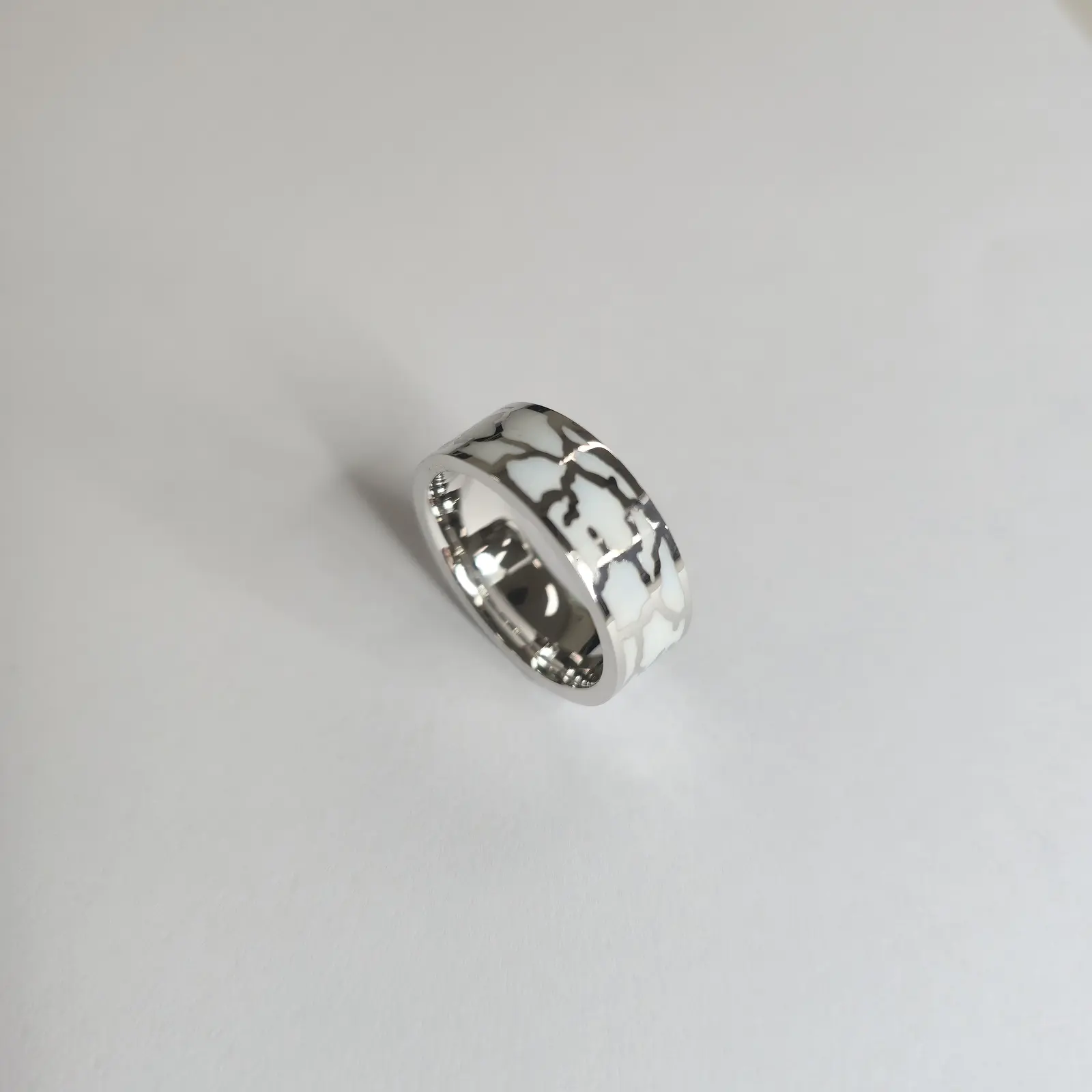
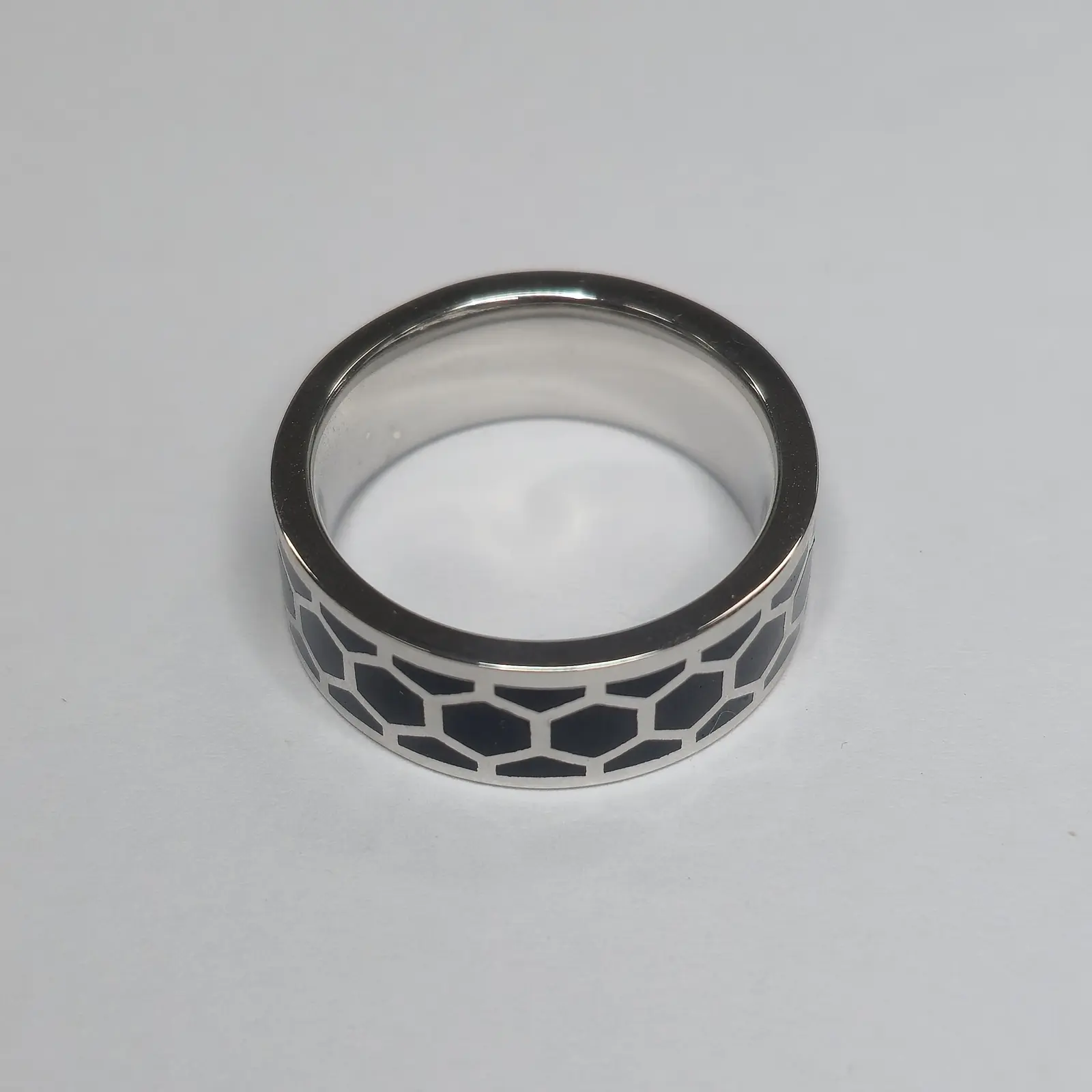
Epoxy inlay creates colored areas by filling grooves or compartments in a product with epoxy resin and allowing it to cure. The shape of the finished color area is determined by the recess and its boundaries, so the area to be colored needs space that can hold the resin.
Where can
it be used?
It can be used in clearly bounded areas such as logos, lettering and patterns, or to give part of a product a different color from the surrounding metal. Multiple separate colors are possible, but the achievable detail depends on the size and shape of each colored area.
Can it cover
a broad curved surface?
On broad curved surfaces without boundaries, it is difficult to keep epoxy resin at a consistent thickness and shape. Strong curvature can cause resin to pool before curing or leave uneven surface height and color. It may be necessary to divide the colored area, add boundaries at its edges, or adjust the curve and area of color. After reviewing your concept, TN Silver will explain what can be achieved and the adjustments needed.
Matching
your desired color
Colors in reference images and on screens vary with monitors and photography conditions. An image can establish the direction if you want a similar color family. When an exact color matters, such as a brand color, a Pantone number or physical color sample provides a clearer reference. Even if the color is not yet fixed, we can discuss it using the mood or reference images you have in mind.